

Could Sumac, a Common Kitchen Spice, Be a Powerful Tool for Reducing Inflammation and Improving Metabolic Health?
- Raluca Tiganila
- Apr 22
- 4 min read

Updated: Aug 6

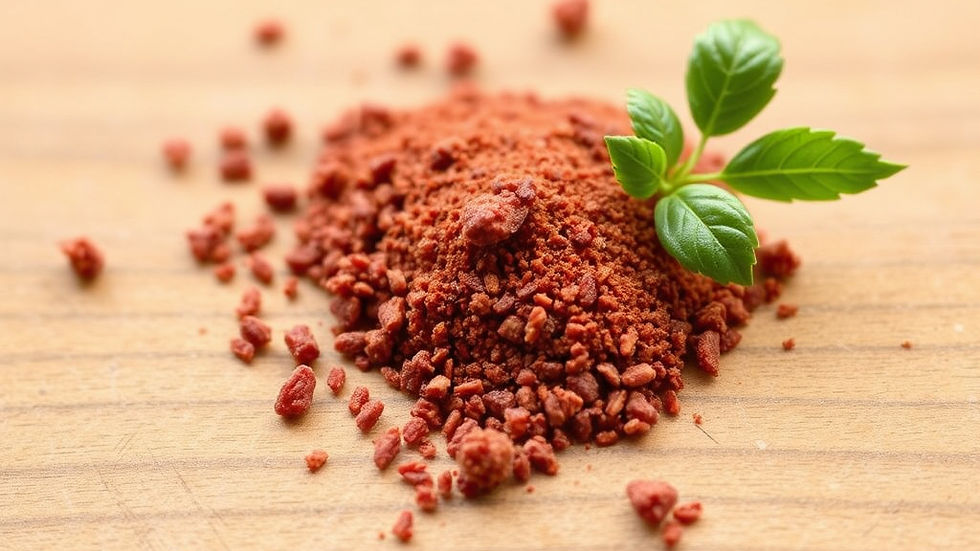
Sumac (Rhus coriaria) is often overlooked as just a tangy, lemony spice used in Middle Eastern and Mediterranean cooking. Yet, recent research reveals that sumac offers more than flavor, it may play a significant role in reducing inflammation and supporting metabolic health. Studies suggest that consuming about 1 to 3 grams of sumac daily for 6 to 12 weeks can lead to measurable improvements in cholesterol levels, insulin sensitivity, antioxidant capacity, and immune regulation.
This post explores the scientific findings behind sumac’s health benefits and what this means for anyone interested in natural ways to support their body’s metabolic and inflammatory balance.
Sumac’s Impact on Cholesterol and Cardiovascular Health

One of the most studied effects of sumac is its ability to improve lipid profiles, which are closely linked to cardiovascular risk. Research shows that daily intake of 1 to 3 grams of sumac can:
Lower LDL cholesterol (often called “bad” cholesterol), which contributes to plaque buildup in arteries
Raise HDL cholesterol (“good” cholesterol), which helps remove excess cholesterol from the bloodstream
Reduce triglycerides, a type of blood fat associated with heart disease risk
These changes suggest that sumac supports healthier lipid metabolism, which in turn reduces inflammation in blood vessels and lowers the risk of cardiovascular problems. For example, a study involving adults with mild cholesterol issues found that after 8 weeks of sumac supplementation, participants had significantly better cholesterol ratios and lower markers of inflammation.
How Sumac Enhances Insulin Sensitivity and Blood Sugar Control
Metabolic health depends heavily on how well the body manages blood sugar and insulin. Sumac appears to improve these factors by:
Lowering fasting blood glucose levels
Reducing circulating insulin levels
Improving insulin resistance, measured by the Homeostatic Model Assessment of Insulin Resistance (HOMA-IR)
Slightly lowering glycosylated hemoglobin (HbA1c), which reflects long-term blood sugar control
Improved insulin sensitivity means the body uses insulin more effectively, reducing the risk of chronic inflammation and metabolic diseases like type 2 diabetes. In one clinical trial, participants who consumed 2 to 3 grams of sumac daily for 12 weeks showed better glucose regulation and lower insulin resistance compared to a control group.
Supporting Metabolic Balance with Sumac

Beyond cholesterol and blood sugar, sumac may help with overall metabolic regulation. Studies report modest but consistent reductions in:
Body weight
Body Mass Index (BMI)
Waist circumference
While these changes are not dramatic, they indicate that sumac could support weight management and reduce abdominal fat, which is a key factor in metabolic syndrome and inflammation. For instance, a 10-week study found that participants taking sumac experienced small decreases in waist size, suggesting improved fat distribution.
Sumac’s Strong Antioxidant Effects

Oxidative stress contributes to chronic inflammation and tissue damage. Sumac contains powerful antioxidants that help protect cells from damage caused by reactive oxygen species. Regular consumption of 1 to 3 grams daily has been shown to:
Reduce markers of oxidative stress
Increase total antioxidant capacity in the blood
These antioxidant effects help lower chronic inflammation and may reduce the risk of autoimmune activity. The spice’s rich polyphenol content is believed to be responsible for these protective properties.
Anti-Inflammatory and Immune-Modulating Benefits
Sumac doesn’t just reduce inflammation; it also helps regulate the immune system. It lowers inflammatory signaling molecules without suppressing immune function, supporting a balanced immune response. This means sumac may help the body manage inflammation more effectively without weakening defenses against infections.
Why This Matters for Autoimmune Health
Autoimmune conditions are driven by overlapping factors:
Chronic inflammation
Metabolic dysfunction
Oxidative stress
Immune imbalance
Sumac, at consistent dietary doses, targets all of these pathways simultaneously, making it a useful supportive tool within a broader strategy.
Practical Tips for Adding Sumac to Your Diet

Incorporating sumac into your daily routine is simple and enjoyable. Here are some ideas:
Sprinkle sumac on salads, roasted vegetables, or grilled meats for a tangy flavor boost
Mix sumac into yogurt or hummus as a flavorful dip
Use sumac in marinades or spice rubs for chicken and fish
Add sumac to rice or grain dishes for a subtle citrus note
Aim for about 1 to 3 grams per day, which is roughly a teaspoon or less. Consistent intake over several weeks is key to experiencing the potential health benefits.
Why I Use Sumac in My Autoimmune Reset Program
Because of these effects, I include sumac (typically around 1–3 grams daily) as part of my Autoimmune Reset Program.
It supports:
Reduced inflammation
Improved metabolic function
Better immune system regulation
Not as a standalone solution—but as part of a structured, evidence-based approach to restoring balance.
Ready to Reset Your System?
If you’re dealing with ongoing inflammation or autoimmune symptoms, the goal isn’t a quick fix—it’s a targeted system that works across multiple pathways.
That’s exactly what my Autoimmune Reset Program is designed to do.Learn how to use evidence-based strategies—including functional foods like sumac—to support your body and reduce inflammation at the root.
References:
Alsamri, H., Athamneh, K., Pintus, G., Eid, A. H., & Iratni, R. (2021).Pharmacological and antioxidant activities of Rhus coriaria L. (Sumac). Antioxidants, 10(73).
Calabrò, A., Ligotti, M. E., Accardi, G., Di Majo, D., Caruso, C., Candore, G., & Aiello, A. (2023).The nutraceutical properties of Rhus coriaria Linn: Potential application on human health and aging biomedicine.International Journal of Molecular Sciences, 24, 6206.
Firat, Y. Y., Cicek, B., Kara, A., Ozturk, N. K., & Ilgun, S. (2025).Effects of thyme, cumin, and sumac extracts on apoptosis and paraptosis in hepatocellular carcinoma: Synergistic, antagonistic, or additive properties.
Jafari, A., ParsiNezhad, B., AhmadianMoghaddam, M., Hasani, M., Rasaei, N., Saeedi-Boroujeni, A., Roshandel, G., Besharat, S., Chambari, M., & Alaghi, A. (2025).Sumac (Rhus coriaria L.) and human metabolic health: A systematic review and meta-analysis.
Jafarpour, A., Jalali, S., Akhlaghi, M., & Amin Amlashi, M. (2024).The effect of sumac on cardiometabolic parameters in adults: A systematic review and meta-analysis of randomized controlled trials.
Saravani, M., Memariani, Z., Behnampour, N., Seyyedmajidi, M., & Kolangi, F. (2024).Effects of sumac aqueous extract along with eating and drinking modification on functional dyspepsia symptoms in comparison with omeprazole: An open-label, randomized, controlled clinical trial.
Gur, T. (2022).Green synthesis, characterization of silver nanoparticles using sumac (Rhus coriaria L.) plant extract and their antimicrobial and DNA damage protective effects.
Hashemi, S. M., et al. (2022).The effect of pomegranate juice and sumac consumption in the treatment of outpatients with COVID-19.
Rahideh, S. T., et al. (2021).The effect of sumac (Rhus coriaria L.) supplementation on glycemic indices: A systematic review and meta-analysis of controlled clinical trials.


Comments